24 Jun 2026
Layered Code Sequencing: How Staged Activations Bridge Poker Tables, Slot Reels, and Matchday Wagers Inside Licensed British Apps
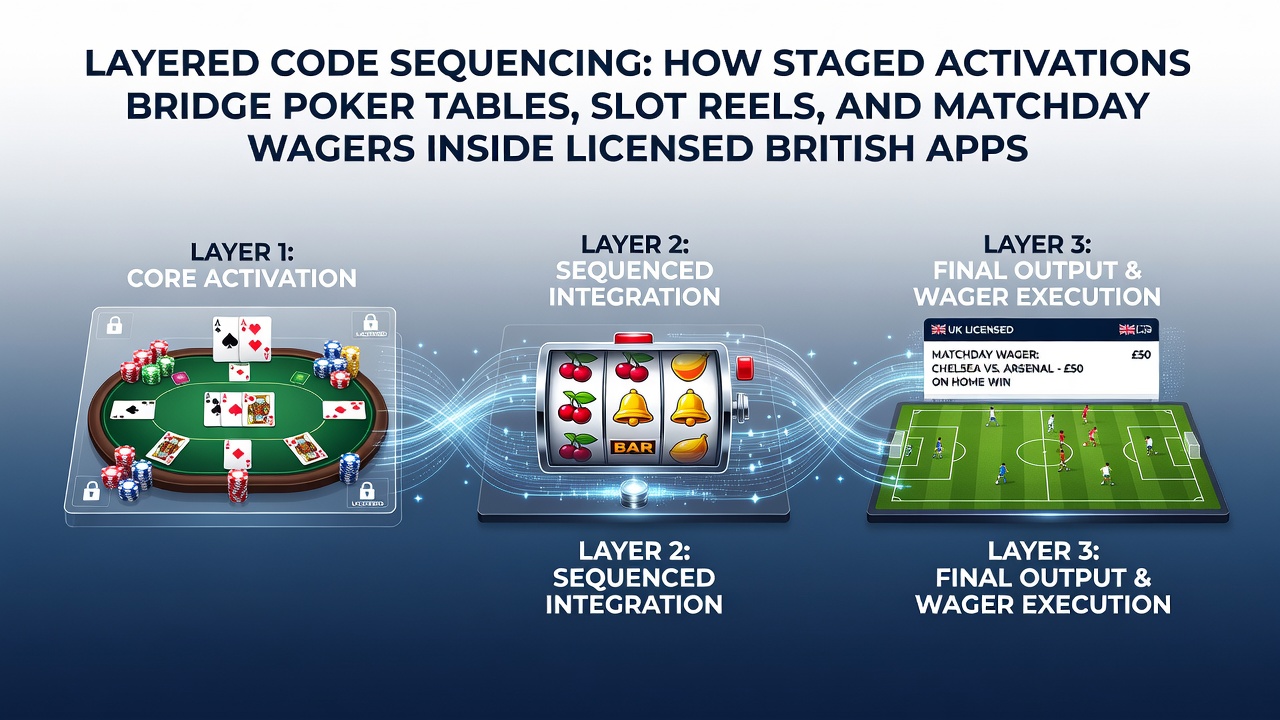
Layered code sequencing refers to a structured system where promotional codes in licensed British gambling applications activate in distinct stages, allowing users to progress through different game categories without separate registrations for each feature. Observers note that this approach integrates poker tables with slot reels and matchday wagers by sequencing rewards so that initial activations unlock elements in one area while subsequent stages extend access to others, creating a continuous pathway across the platform.
Studies from gaming research institutions show that these sequences typically begin with a base code entry that credits an account for immediate use in slots, after which completion metrics such as wagering thresholds trigger extensions into poker tournaments or sports betting markets. Data indicates this method maintains compliance with regional licensing requirements while enabling cross-category engagement, as each stage builds on verified activity from the prior one.
Mechanics of Staged Activations Across Game Types
Within these applications the first stage often focuses on slot reels, where code entry applies credits that users deploy on designated machines, and progress tracks through spin counts or total stakes placed. Once those parameters reach set levels the sequence advances automatically, opening poker table access where the same code now supports buy-ins or tournament entries that carry forward any remaining value from earlier play. Researchers at institutions like the University of Nevada Gaming Research Center have documented similar sequencing patterns in multi-game environments, noting that the transitions reduce friction between categories while preserving separate audit trails for each segment.
Matchday wagers enter the sequence at later stages, typically after poker milestones confirm ongoing participation, at which point the code extends to pre-match or in-play betting options on major events. This layering ensures that activations do not overlap in a single transaction but instead accumulate across sessions, with each phase requiring distinct confirmation steps such as minimum playtime or stake verification. Figures from industry reports reveal that platforms employing this structure report higher retention across all three categories compared with single-category promotions.
Integration Patterns Observed in 2026 Platform Updates
By June 2026 several licensed operators had refined their sequencing protocols to align with evolving device capabilities, allowing real-time tracking of stage completion through app notifications that link slot performance directly to poker availability. Those updates incorporated elements where matchday wager options unlock only after combined metrics from the first two categories meet thresholds, creating a bridged experience that spans the full app ecosystem. External analyses from groups such as the European Gaming and Betting Association highlight how these refinements support regulatory reporting by logging each stage separately yet connecting them through a unified user account.
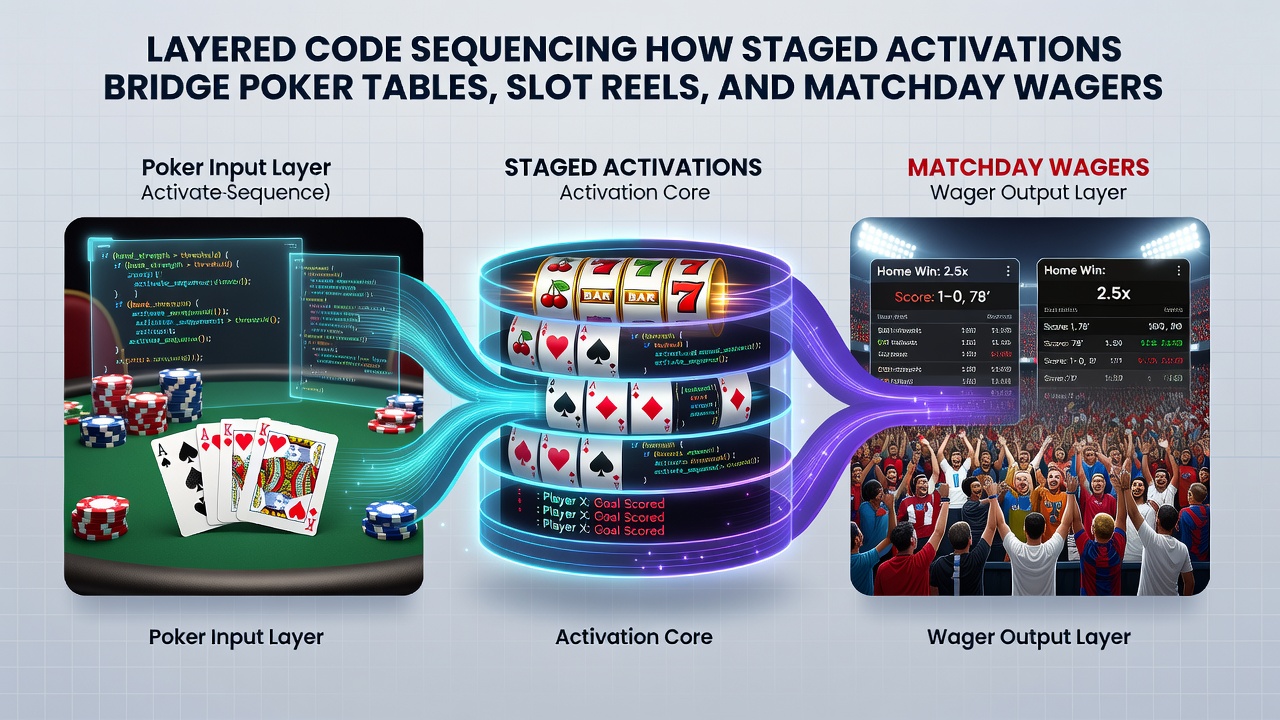
One documented case involved a platform that sequenced codes so slot reel credits converted into poker chip equivalents upon reaching a defined turnover, after which any unused portions transferred into wager credits for upcoming fixtures. This bridging mechanism operates through backend rules that monitor activity logs across sections rather than requiring manual code re-entry, which streamlines the process while maintaining distinct category boundaries. Academic papers on digital gambling systems note that such patterns emerged as operators responded to user preferences for unified account management without merging game mechanics themselves.
Technical Implementation and Compliance Considerations
Developers structure these sequences using conditional logic that evaluates user actions in real time, advancing stages only when predefined criteria are satisfied and logging each transition for audit purposes. Compliance frameworks require that activations remain tied to licensed operations, with each layer respecting age verification and spending limits established at account level. Reports from regulatory bodies in comparable markets, including those in Australia, demonstrate that sequenced systems facilitate clearer oversight because they generate granular data on how promotions distribute across poker, slots, and sports features.
Users encounter these sequences through in-app prompts that indicate current stage status and upcoming unlocks, often accompanied by progress indicators that span multiple game interfaces. The design avoids simultaneous activation across categories, instead guiding participants sequentially so that engagement in one area informs eligibility in the next. This method has been adopted in various licensed environments because it aligns promotional tools with existing game architectures without necessitating structural overhauls.
Conclusion
Layered code sequencing therefore functions as a connective framework that links poker tables, slot reels, and matchday wagers inside licensed British applications through progressive activations rather than isolated offers. Evidence from multiple research sources confirms that the approach supports both operational efficiency and regulatory alignment by distributing rewards across stages while preserving category-specific tracking. As platforms continue to update these systems in 2026 and beyond, the core structure remains focused on sequenced progression that bridges distinct gaming elements under a single account framework.