10 Jun 2026
Tracing Code Pathways: How Sequential Activations Bridge Mobile Sports, Casino, and Poker Rewards Across Digital Platforms
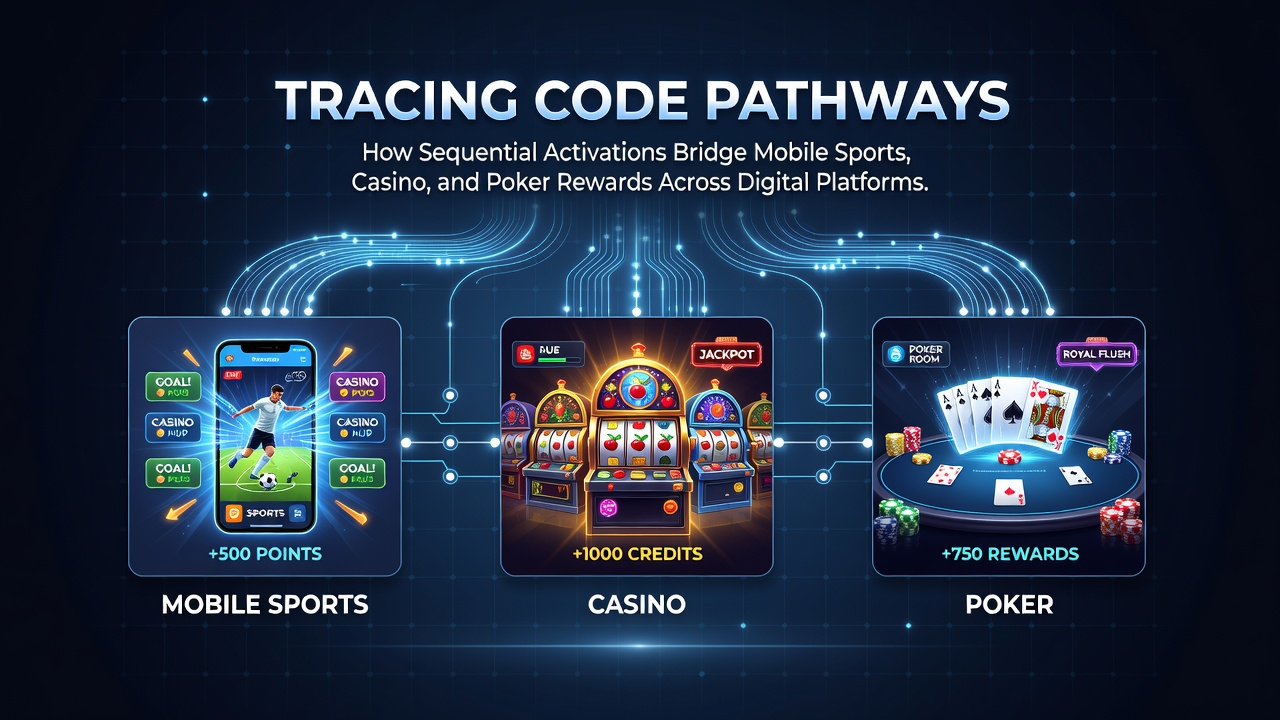
Sequential activations function as digital bridges that link rewards systems across mobile sports betting, casino environments, and poker rooms, allowing users to move between verticals through coded sequences rather than isolated entries. These pathways operate via layered triggers where an initial activation in one category generates follow-on rewards in others, creating continuous engagement loops documented across multiple platform architectures in 2026.
Mechanics of Code Sequencing in Mobile Ecosystems
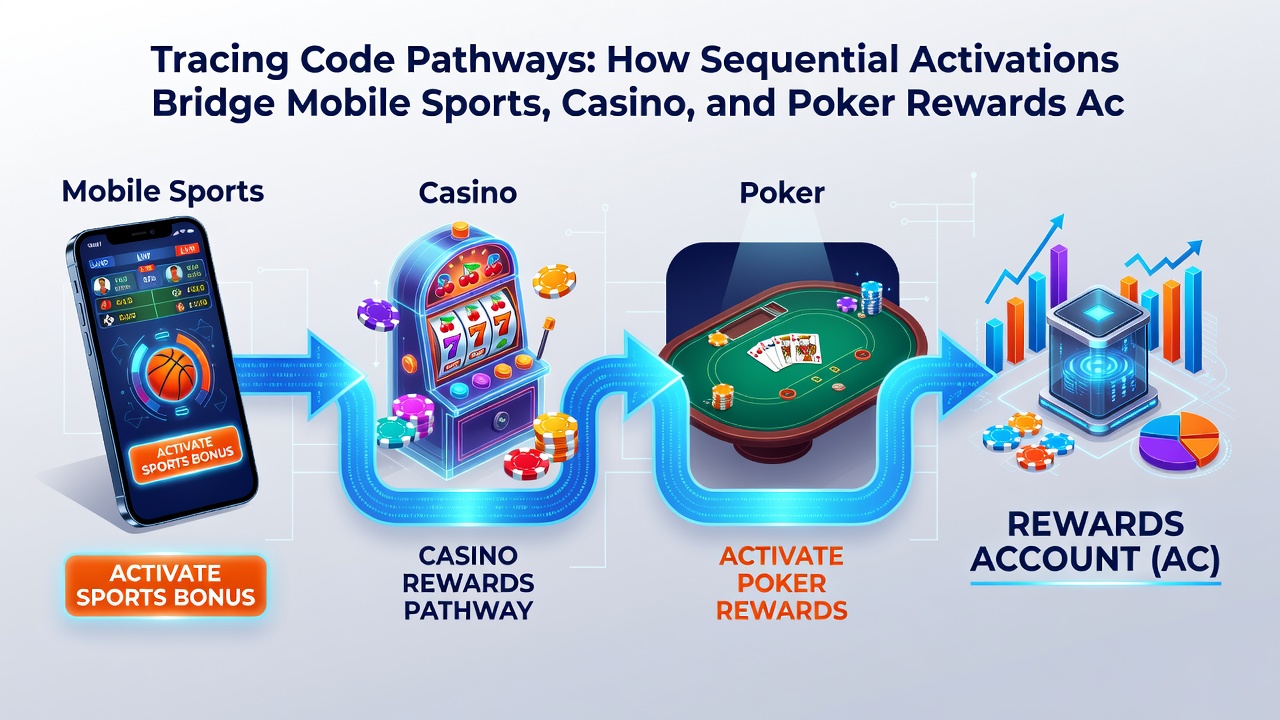
Code pathways begin with a primary activation string entered through a mobile app interface, which registers the action in a centralized ledger before distributing secondary entitlements. Sports betting activations frequently initiate the sequence by crediting a wager threshold that then unlocks casino chip equivalents or poker tournament entries, a pattern observed in systems where backend APIs synchronize user profiles across product silos. Data from platform analytics indicates these sequences reduce friction by pre-filling subsequent reward fields, eliminating redundant verification steps.
Researchers at the University of Nevada's International Gaming Institute have documented how timestamped code chains maintain continuity, with each activation carrying metadata that references prior steps to prevent duplication while extending eligibility windows. In practice, a mobile sports wager placed through an activated code can cascade into slot credit within the same session when the platform's reward engine detects completion criteria, a process refined through iterative updates rolled out in early 2026.
Cross-Vertical Reward Bridging Patterns
Platforms deploy these sequences to connect sports, casino, and poker by mapping activation events to shared loyalty ledgers, where progress in one vertical contributes to thresholds in others. A completed sports bet sequence, for instance, may increment a cumulative activity meter that releases poker sit-and-go entries once the meter reaches designated markers, while parallel casino spins accumulate separate but linked multipliers. Observers note that this interconnection relies on unified user accounts that track sequential states without requiring manual transfers between apps.
Implementation Across Major Mobile Platforms
Leading operators structure their code pathways through modular reward engines that prioritize mobile-first delivery, ensuring activation codes entered via smartphone interfaces propagate instantly to desktop counterparts when users switch devices. June 2026 updates introduced enhanced encryption for these sequences, addressing latency issues that previously interrupted cross-vertical transfers during peak hours. Figures from industry reports show increased adoption rates for multi-vertical sequences following these refinements, particularly among users who alternate between live sports events and table games within single sessions.
Technical Infrastructure Supporting Sequential Flows
Backend databases store activation histories as relational chains rather than discrete events, enabling platforms to trace reward eligibility backward through the sequence when disputes or verification requests arise. This architecture supports real-time synchronization across sportsbooks, casino lobbies, and poker clients, with each node querying the central chain before granting access. Experts tracking platform development have identified standardized protocols that allow third-party developers to integrate their own activation modules without disrupting existing bridges between verticals.
Sequential systems also incorporate fallback mechanisms that preserve partial progress if a session terminates unexpectedly, automatically resuming the chain upon re-entry through the same mobile device. Such resilience features, expanded in mid-2026 deployments, maintain continuity for users navigating between time-sensitive sports markets and slower-paced poker tables or casino progressives.
Regulatory and Compliance Considerations in 2026
Authorities in regions including Australia and Canada have examined how sequential activations interact with responsible gambling tools, requiring platforms to embed pause functions that halt code progression across all linked verticals simultaneously. Reports compiled by the Australian Gambling Research Centre detail testing protocols that verify these sequences do not bypass spending limits when users move from sports to casino or poker segments. Compliance frameworks emphasize audit trails that record every activation step, allowing regulators to reconstruct pathways during periodic reviews.
Operators respond by embedding geo-fencing and age-verification checkpoints at sequence initiation points, ensuring downstream rewards inherit the same restrictions applied to the original activation. This layered approach aligns with broader industry standards emerging from cross-border gaming associations focused on mobile integrity.
Conclusion
Sequential activations continue to evolve as connective tissue across mobile sports, casino, and poker environments, supported by synchronized ledgers and refined technical protocols that emerged prominently through 2026 updates. Platforms that maintain robust code pathways demonstrate measurable continuity in user activity across verticals, while regulatory scrutiny ensures these systems operate within established compliance boundaries. The architecture remains dynamic as operators refine chain logic to accommodate new device capabilities and market requirements.