UK Betting Buzz: High Stakes, Hot Trends, and Regulatory Ripples
20 Apr 2026
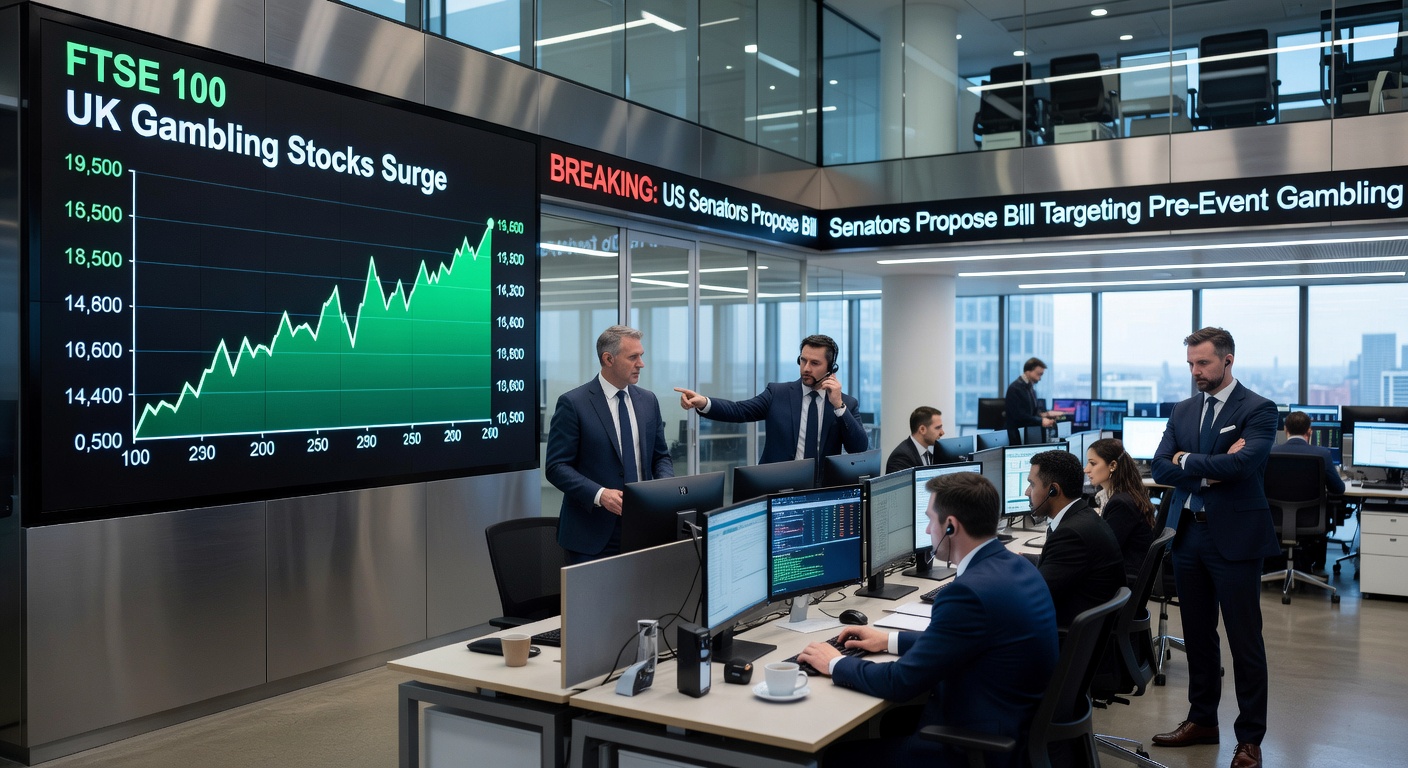
UK Gambling Stocks Surge as US Senators Eye Crackdown on Prediction Markets

UK-listed gambling stocks climbed sharply in recent trading sessions after a bipartisan group of US senators introduced legislation aimed squarely at prediction market platforms like Kalshi and Polymarket, platforms that trade event-based contracts mimicking sports betting yet operate without the state-level gambling licenses overseen by traditional regulators; instead, these sites fall under the Commodity Futures Trading Commission's purview, sparking debates over regulatory overlaps and market fairness.
Traditional operators, long entrenched in the regulated sports betting landscape, watched their share prices rise as the proposed bill seeks to plug what lawmakers describe as exploitable gaps in oversight, gaps that have allowed prediction markets to flourish with sports-related contracts making up a whopping 90% of Kalshi's trading volume according to industry data.
The Bill's Core Targets: Kalshi, Polymarket, and Event Contracts
Senators from both sides of the aisle unveiled the measure in a move that observers have tied directly to growing concerns over unregulated betting-like activities dressed up as futures contracts; Kalshi, for instance, offers yes/no bets on outcomes from elections to weather events, but sports props dominate its ledger, drawing fire for skirting the strictures that licensed sportsbooks must navigate state by state.
Polymarket faces similar scrutiny, its crypto-fueled platform enabling global punters to wager on real-world events without the geographic or licensing hurdles that bind operators like FanDuel or BetMGM; the Commodity Futures Trading Commission, which greenlights these markets under the Commodity Exchange Act, has approved limited event contracts before, yet the bill proposes tighter reins, potentially classifying more offerings as unlawful gambling and handing an edge to licensed incumbents.
What's interesting here is how these platforms have ballooned in popularity post-2022 US sports betting legalization wave, pulling in users who might otherwise stick with apps from established firms, and now lawmakers want to level the field before prediction volumes eclipse traditional handles.
Share Price Jumps: Flutter and Entain Lead the Charge
Flutter Entertainment, owner of FanDuel—the powerhouse holding 43% of the US sports betting market share—saw its London Stock Exchange shares spike by over 5% in a single session following the bill's announcement, a rally that extended into the next trading day as investors bet on reduced competition from upstarts.
Entain, parent to BetMGM which clocked $2.8 billion in revenue for 2025 alone, mirrored the gains with a 4.2% uptick, figures that analysts attribute to the market's quick read on how curbing prediction sites could funnel bettors back to regulated channels where compliance costs create natural moats.
And it's not just these giants; smaller UK-listed peers in the sector notched gains too, pushing the broader gambling index higher amid April 2026's volatile markets, where economic headwinds had previously weighed on discretionary spends like betting.
Why Prediction Markets Stir the Pot
These platforms operate in a gray zone, offering contracts on Super Bowl winners or NBA finals without triggering state gambling laws since the CFTC deems them derivatives rather than wagers; take one case where Kalshi's NFL contract volumes rivaled some state handles, yet without contributing to local taxes or adhering to responsible gaming mandates that traditional books enforce.
Data indicates sports events drive the lion's share of activity—90% for Kalshi—blurring lines with outright betting, and that's where the rubber meets the road for regulators who see unlicensed growth as a threat to the $20 billion-plus US sports betting economy built painstakingly since PASPA's repeal.
Turns out, the bipartisan backing stems from senators' districts hosting major leagues and stadiums reliant on partnerships with licensed operators, partnerships that prediction sites disrupt by siphoning off casual fans with lower barriers and flashier interfaces.
State-Level Pushback Amplifies the Momentum
While the federal bill brews in Washington, states have ramped up their own offensives, including an Arizona criminal case against a prediction market operator for unlicensed activity and cease-and-desist orders from attorneys general in New York and Nevada, actions that underscore how local enforcers view these platforms as end-runs around hard-won legalization frameworks.
Arizona's probe, detailed in court filings, highlights bets on college sports that allegedly violated state compacts with tribes, while Nevada's Gaming Control Board has warned platforms to steer clear of resident bettors; such moves benefit UK firms listed on the LSE, whose US arms comply fully and now stand to capture displaced volume.
Here's where it gets interesting: these state actions predate the Senate bill yet align perfectly, creating a pincer effect that prediction markets struggle to dodge, especially as crypto ties for sites like Polymarket invite extra scrutiny under evolving FinCEN rules.
Traditional Operators' Stronghold in Numbers
Flutter's FanDuel commands that 43% US market slice through heavy marketing and tech investments, generating billions in handle while navigating 38 states' nuances; Entain's BetMGM, partnered with MGM Resorts, hit that $2.8 billion revenue mark in 2025 by blending online sports with retail casino synergies, a model prediction sites can't replicate without licenses.
Figures from the American Gaming Association reveal US sports betting revenues topped $13 billion last year, with licensed books paying out $1.5 billion in taxes—funds that unregulated platforms bypass entirely, fueling calls for parity.
People who've tracked this space note how UK parents like these two dominate globally too, with Flutter's Paddy Power and Entain's Ladbrokes thriving in regulated Europe, positioning them to weather US turbulence better than pure-play prediction outfits.
Global Ripples for UK-Listed Betting Giants
London's gambling sector, home to firms eyeing US expansion, felt the bill's aftershocks most acutely since America represents the growth engine; shares in DraftKings (US-listed but with UK ties) rose in tandem, yet FTSE-listed names like Flutter and Entain drew outsized bids from funds betting on moat reinforcement.
Observers point out that closing CFTC loopholes could redirect billions in potential handle—Kalshi alone processed over $1 billion in election bets last cycle, a taste of what's possible for sports if left unchecked—and channel it toward taxed, compliant books.
But the ball's in Congress's court now, with hearings slated for summer 2026; until then, stocks ride the regulatory wave, reflecting bets that tradition trumps innovation when licenses are on the line.
Looking Ahead: Regulatory Clarity on the Horizon
As April 2026 unfolds, the interplay between federal ambitions and state enforcements paints a picture of convergence, where prediction markets' freewheeling days face sunset; traditional operators, battle-tested in compliance, gear up to absorb any exodus, their share surges a testament to markets pricing in victory before votes are cast.
One study from gaming researchers underscores this shift, showing licensed markets retain 85% of migrated users long-term due to trust and features like self-exclusion, advantages unregulated sites lack; for UK stocks, it's a tailwind extending beyond borders, bolstering positions in Australia and Europe where similar debates simmer.
Conclusion
The senators' bill marks a pivotal moment, thrusting prediction platforms into the spotlight while lifting shares for Flutter, Entain, and peers; with sports contracts fueling 90% of Kalshi's action and state cases piling up, established books stand primed to reclaim turf, their regulatory armor shining brighter in this unfolding saga.
Investors and insiders alike keep watch, knowing that when Washington moves on gambling's frontiers, the winners often hail from London's exchange, where history favors the licensed path forward.